



Introduction
Managing a mobile workforce has become more challenging than ever. Businesses that rely on technicians to perform repairs, maintenance, inspections, or installations must coordinate schedules, communicate job updates, and maintain accurate service records. Traditional methods such as paper forms, spreadsheets, and phone calls often create delays, increase errors, and reduce productivity. A mobile field service app offers a smarter way to manage these daily operations.
A modern mobile field service app gives technicians instant access to work orders, customer information, schedules, and reporting tools from virtually anywhere. Office teams also benefit by receiving real-time updates, enabling better coordination and faster decision-making.
As customer expectations continue to evolve, adopting a mobile field service app can improve operational efficiency, strengthen communication, and help businesses complete more work in less time. This article explores its benefits, key features, implementation strategies, and future trends.
What Is a Mobile Field Service App?
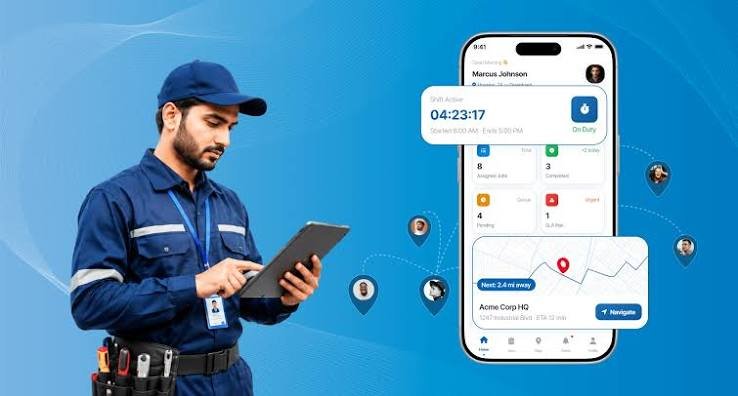
A mobile field service app is a digital application designed to support technicians who work outside the office. It allows field employees to receive assignments, update job progress, capture service information, and communicate with office teams through mobile devices.
Instead of relying on paperwork or repeated phone calls, a mobile field service app centralizes important operational information in one easy-to-access location. This helps improve workflow accuracy while reducing administrative tasks.
How a Mobile Field Service App Improves Daily Operations
Faster Job Assignment
Managers can distribute work orders quickly, ensuring technicians receive assignments without unnecessary delays.
Real-Time Communication
A mobile field service app enables instant communication between dispatchers and technicians, reducing misunderstandings and improving collaboration.
Digital Documentation
Technicians can record notes, upload images, complete inspection forms, and document completed work electronically.
Improved Scheduling
Updated schedules allow technicians to stay informed about new assignments, appointment changes, and urgent requests throughout the workday.
Better Access to Customer Information
Customer histories, equipment records, and service instructions remain available whenever technicians need them.
Benefits of Using a Mobile Field Service App
Increased Productivity
Technicians spend less time handling paperwork and more time performing field work, allowing them to complete additional assignments.
Better Customer Experience
Accurate arrival times, improved communication, and faster service completion contribute to higher customer satisfaction.
Reduced Administrative Work
Electronic documentation minimizes manual data entry while simplifying record management.
Improved Operational Visibility
Managers receive live updates regarding technician locations, assignment progress, and completed work.
Accurate Record Keeping
Every completed assignment is stored digitally, making future maintenance history easy to access.
Best Practices for Implementing a Mobile Field Service App
Provide Employee Training
Comprehensive training helps technicians confidently use every feature of the application.
Keep Data Updated
Customer information, technician availability, and equipment records should remain accurate to improve scheduling decisions.
Encourage Immediate Updates
Technicians should report progress throughout the day to maintain accurate operational visibility.
Standardize Digital Workflows
Consistent forms and documentation procedures improve reporting accuracy across the organization.
Monitor Performance
Review productivity reports regularly to identify workflow improvements and scheduling opportunities.
Industries That Benefit from a Mobile Field Service App
A mobile field service app supports many industries that rely on field employees.
HVAC
Technicians access maintenance schedules, equipment history, and customer information before every appointment.
Plumbing
Emergency repairs and scheduled maintenance become easier to organize with digital work orders.
Electrical
Electricians update assignments, complete reports, and document repairs directly from job sites.
Facility Maintenance
Maintenance teams coordinate inspections and repairs while remaining connected with office staff.
Equipment Maintenance
Organizations servicing machinery improve documentation and workforce coordination through mobile technology.
Future of the Mobile Field Service App
Technology continues to expand the capabilities of the mobile field service app. Artificial intelligence, cloud computing, predictive maintenance, and advanced analytics will continue improving technician productivity and operational efficiency.
Future applications will provide smarter scheduling recommendations, automated reporting, and enhanced decision support, helping organizations adapt quickly to changing operational demands.
Conclusion
A mobile field service app has become an essential tool for businesses managing technicians outside the office. By improving communication, simplifying documentation, optimizing scheduling, and increasing operational visibility, it helps organizations deliver more efficient and reliable field operations.
As digital transformation continues across industries, implementing a mobile field service app provides lasting value through improved productivity, stronger collaboration, and better customer experiences. Organizations that embrace mobile technology today will be better prepared for the future of field service management.